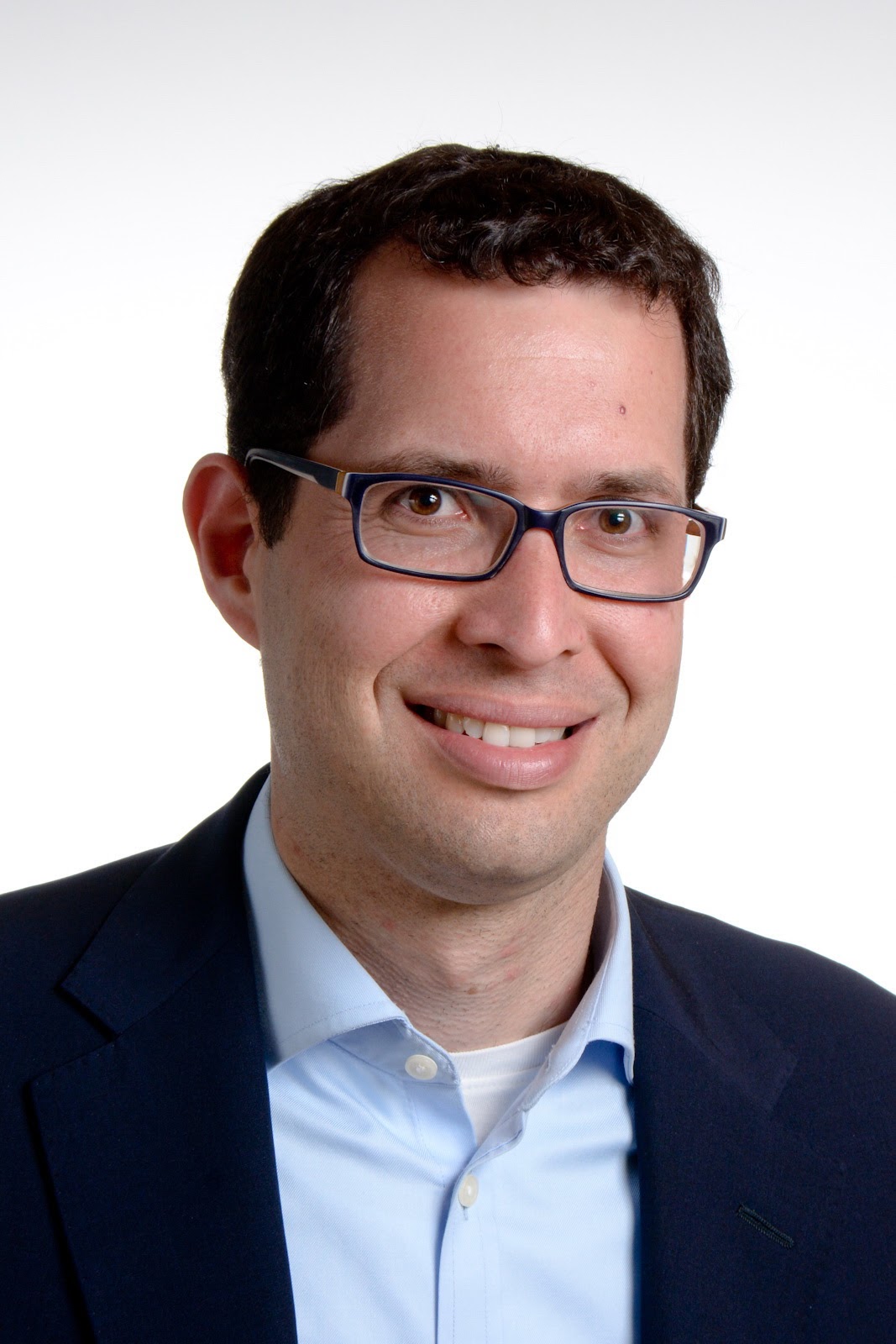
Caleb Chill
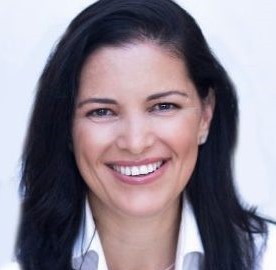
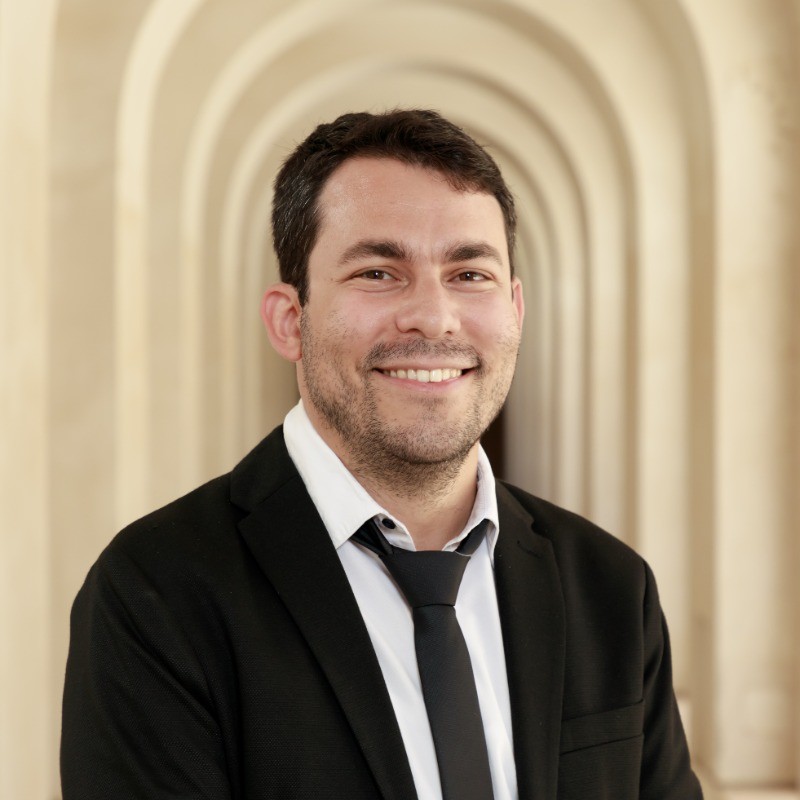
Caleb “Cali” Chill is the CEO of OurCrowd, the Jerusalem-born global investment platform reshaping access to venture capital and private markets. A seven-year OurCrowd veteran, Cali rose through nearly every critical part of the business—from General Counsel and Chief Legal Officer to Head of Funds, Chief Investment Officer and Chair of the Investment Committee—before taking the helm. His investment leadership has encompassed some of technology’s most sought-after names, including Anthropic, Databricks, Scale AI, Safe Superintelligence, Groq, Quantum Machines and SpaceX. Today, he leads a platform with more than $2.6 billion in commitments, investments across 500-plus companies and a track record of more than 70 exits.
Cali brings an unusually powerful blend of investor instinct, legal precision and operator discipline. Before joining OurCrowd, he served as General Counsel of Nasdaq-listed Answers Corporation and of AFCV Holdings, a private-equity-backed technology investor, leading complex transactions across mergers and acquisitions, corporate finance, intellectual property and commercial strategy. He holds a combined LL.B./MBA from Bar-Ilan University and is licensed to practice law in both Israel and New York. With experience spanning boardrooms, investment committees and high-stakes deals, Cali has built his career turning sophisticated opportunities into scalable platforms—and is now leading OurCrowd into its next era of focused, globally connected growth.
Michael Munger
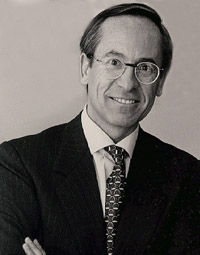
Professor Michael C. Munger is a distinguished political economist and the Pfizer–Edmund T. Pratt Jr. University Distinguished Professor at Duke University, where he holds appointments in political science, economics and public policy. His research examines the functioning of markets, regulation, political institutions and collective decision-making. Before entering academia, he served as a staff economist at the U.S. Federal Trade Commission. He later taught at Dartmouth College, the University of Texas at Austin and the University of North Carolina at Chapel Hill before joining Duke, where he served multiple terms as chair of the Department of Political Science.
Professor Munger holds a PhD in Economics from Washington University in St. Louis and has earned recognition as both a prolific scholar and an award-winning teacher. His work bridges economics, political science and philosophy, exploring how institutions enable cooperation, how groups make decisions and how transaction costs shape emerging markets. His books include Choosing in Groups: Analytical Politics Revisited, The Thing Itself: Essays on Academics, Economics, and Policy, Tomorrow 3.0: Transaction Costs and the Sharing Economy and The Sharing Economy: Its Pitfalls and Promises. He is also a past president of the Public Choice Society and a former North American editor of the journal Public Choice.
Osnat Saporta
Dr. Osnat Sporta is a strategic consultant, project manager, and expert in education policy, management, and innovation. She advises local authorities, senior executives, and educational organizations through processes of change and renewal.
Previously, she served as Deputy Director General of the Hadera Municipality and as Head of its Society and Community Administration, overseeing education, social welfare, culture, sports, youth, and community affairs. Before that, she headed the Secondary Education Division at the Holon Municipality, founded and led an elementary school in Ra’anana, directed Tel Aviv University’s research on experimental schools, and taught in a master’s program in education policy. As part of her public service, she served on the Kfar Saba City Council and held the education portfolio.
Dr. Sporta holds a PhD in Education Policy and a master’s degree with honors in Educational Administration and Leadership from Tel Aviv University, as well as a bachelor’s degree and teaching certificate in mathematics from Beit Berl College. She is a graduate of the leadership program at Harvard Business School, the Adva Program of the Maoz organization, and the Hebrew University of Jerusalem’s Directors Training Program.
Niclas Berggren
Dr. Niclas Berggren is an associate professor of economics and program director of the Institutions, Markets and Enterprise research program at the Research Institute of Industrial Economics (IFN) in Stockholm. He also holds an associate professorship and teaches in the Department of Managerial Economics at the Prague University of Economics and Business. Dr. Berggren earned his PhD and the academic title of docent from the Stockholm School of Economics and was subsequently awarded the same title by the Prague University of Economics and Business.
Dr. Berggren’s research lies at the intersection of institutional, constitutional and cultural economics. He studies how economic freedom, the rule of law and constraints on political power affect prosperity, as well as how trust, tolerance, religion, social norms and migration interact with markets and public institutions. He has published approximately 50 academic articles in journals including the Journal of Public Economics, Public Choice, the Journal of Institutional Economics, the European Journal of Political Economy and the Journal of Economic Behavior & Organization. He is also the editor of the Handbook of Research on Economic Freedom, which brings together international scholarship on the measurement, causes and consequences of market-oriented institutions.
José Piñera
Dr. José Piñera is a Chilean economist, public-policy reformer and Distinguished Senior Fellow at the Cato Institute. He is the founder and president of the International Center for Pension Reform and co-chairman of Cato’s Project on Social Security Choice. During Chile’s military government, he served as Minister of Labor and Social Security and subsequently as Minister of Mining. He is best known as the principal architect of Chile’s transition to a pension system based on individually funded retirement accounts, as well as for his role in developing major labor-market and mining reforms.
Dr. Piñera earned both his MA and PhD in Economics from Harvard University after completing his undergraduate studies at the Pontifical Catholic University of Chile. Over several decades, he has advised policymakers around the world on pension design, retirement savings and structural economic reform, becoming an influential international advocate for personal-account pension systems and market-oriented public policy. He has written numerous books, essays and articles, with commentary appearing in publications including The Wall Street Journal, The Washington Post, The New York Times, Foreign Affairs and Wired.
Yehonatan Givati
Professor Yehonatan Givati is the Sylvan M. Cohen Professor of Law at the Hebrew University of Jerusalem and the founding director of its Aumann–Fischer Center for Law, Economics and Public Policy. He is also a member of the university’s Center for the Study of Rationality and a senior fellow at the Jewish People Policy Institute. An expert in the economic analysis of law, Professor Givati combines theoretical and empirical methods to examine tax policy, law enforcement, administrative law and regulation, private law, and judicial behavior. He has also served as a visiting professor at Yale Law School.
Professor Givati holds both a PhD in Economics from Harvard University and an SJD from Harvard Law School, as well as degrees in law and economics from the Hebrew University. Before entering academia, he clerked for Justice Esther Hayut of the Supreme Court of Israel and subsequently conducted postdoctoral research in law and economics at New York University School of Law. His scholarship has appeared in leading publications including the American Economic Journal: Economic Policy, Journal of Public Economics, Journal of Law and Economics, Journal of Legal Studies, Cornell Law Review and University of Chicago Law Review. Through his interdisciplinary research, he brings economic evidence and institutional analysis to some of the most consequential questions in law and public policy.
Michael Sarel
Dr. Michael Sarel is one of Israel’s leading economists and the head of the Kohelet Economic Forum. He previously served as Chief Economist and Director of State Revenue, Research and International Affairs at Israel’s Ministry of Finance, where he helped shape national fiscal policy and provided economic analysis to senior government decision-makers. His career spans senior research and advisory roles at the International Monetary Fund, the World Bank, the Bank of Israel and the Ministry of Finance, as well as leadership of the Economics and Research Department at Harel Insurance and Finance Group.
Dr. Sarel holds a PhD in Economics from Harvard University, where he also served as a teaching fellow, and a bachelor’s degree in economics and computer science from the Hebrew University of Jerusalem. An accomplished researcher and policy expert, his work addresses economic growth, productivity, inflation, taxation, fiscal and monetary policy, income distribution and the Israeli economy. He has authored influential research for the IMF and continues to publish policy studies and contribute to public debate on economic reform, financial competition, taxation and long-term prosperity.
Shai Kivity
Shai Kivity heads the Technology Division at Israel’s Ministry of Finance, where he leads the modernization of digital systems and the development of data- and AI-driven products for the public sector. Previously, he served as Vice President of Strategy and Operations at Somite.ai, which develops AI foundation models for stem cell biology. He was also Chief of Staff and the first US employee at 4M Analytics, and a manager at Alvarez & Marsal.
Kivity is a graduate of the IDF’s elite Talpiot program and served in the military for nine years. His defense work earned him, together with his team, the Israel Defense Prize. He holds an MBA from the Wharton School, an MPA from Harvard Kennedy School, an MA in International Relations, and a BSc in Physics and Computer Science from the Hebrew University of Jerusalem.
Yael Elbaz Leshem
Yael Elbaz Leshem leads a Data & AI Products team at the Israel National Digital Agency, developing national data and AI-driven solutions for the public sector. Yael brings over 10 years of experience across cybersecurity, program management, and data product development.
Elbaz Leshem is a Unit 8200 alumna (Captain, Res.) and holds an Executive MBA with distinction from Bar-Ilan University. Over the course of her career, she has focused on leading complex teams and operations, aligning technology with user requirements, and turning public-sector challenges into actionable solutions.
Shiran Froymovich
Dr. Shiran Vaknin Froymovich is an Assistant Professor of Accounting at Binghamton University’s School of Management and an alumna of the Friedberg Economics Institute. Her research lies at the intersection of financial accounting, taxation, macro-accounting and environmental, social and governance issues. She examines how firm-level disclosures can illuminate broader economic trends and inform business decisions and public policy, with recent work addressing ESG-rating competition, the effects of tariffs on American companies and the use of tax-related disclosures to forecast economic growth. Her research has been published in the prestigious Journal of Accounting Research and presented at leading academic conferences.
Dr. Froymovich earned her PhD in Business Administration, specializing in accounting, from Duke University’s Fuqua School of Business. Her doctoral dissertation explored the relationship between aggregate deferred-tax-asset valuation allowances and GDP growth. She also holds an MA in Economics from Ben-Gurion University of the Negev and a BA in Economics and Management, summa cum laude, from the Open University of Israel. Before entering academia, she conducted research at the Israel Tax Authority and the Milken Innovation Center. Recognized for combining rigorous scholarship with accessible, student-centered teaching, she was named one of Poets&Quants’ 50 Best Undergraduate Business Professors for 2025.
Aharon Topper
Advocate Aharon Topper is the co-founder of Topper | Rosenfeld, a boutique Israeli law firm specializing in complex litigation, and an alumnus of the Friedberg Economics Institute. His practice encompasses administrative and constitutional law, civil and commercial disputes, class and derivative actions, regulatory matters, and public-interest litigation. He represents clients before trial and appellate courts and advises on cases involving corporate governance, consumer protection, civil rights and public-sector accountability.
From 2021 to 2024, Topper served as senior law clerk to then-President of the Supreme Court of Israel, Justice Esther Hayut. His earlier experience includes working in the litigation department of a leading Israeli law firm, assisting with complex commercial arbitrations, representing clients before disciplinary tribunals, interning in the State Attorney’s High Court of Justice Department, and working in the Ministry of Justice’s Criminal Law Counseling and Legislation Department. He earned his LL.B. with honors from the Hebrew University of Jerusalem, where he served as editor-in-chief of Hukim, the Faculty of Law’s journal on legislation, conducted research in Jewish law, and authored an award-winning paper on tort law.